google analytics tracking code

Thursday, May 9, 2013

Imperial Ingratitude: No Homosexuality Please, We're British


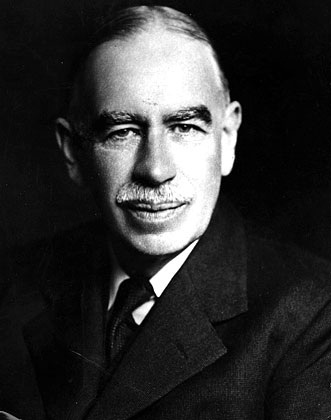
A trinity of British homophobia victims: mathematician Alan Turing (upper left), economist John Maynard Keynes (right), poet and playwright Oscar Wilde (lower center)


Niall Ferguson's recent smear of J.M. Keynes, which, particularly in the context of his previous writings, represents Keynes as an effete homosexual whose childlessness was behind his economic doctrine's supposed inflationary bias and disregard for the long run and whose fantasized infatuation with a Jewish German banker led him to an almost treasonous sympathy (in Ferguson's creative reconstruction) for the plight of post WWI Germany, is unfortunately only a revival of a very sorry British tradition. (While Ferguson has since apologized for the "stupidity and insensitivity" of his remarks, he still insists on seeing Keynes' thought through a sexual lens.)

I'll call this tradition Imperial Ingratitude. While Keynes himself did not seem to suffer from any homophobic discrimination during his lifetime, the same cannot be said of his compatriots Alan Turing and Oscar Wilde, the latter providing the original template for British homosexual persecution and public disgust.

Why ingratitude? Alan Turing and John Maynard Keynes are undoubtedly the two British intellectuals who most contributed as individuals to saving Western Civilization from itself in the 20th century. (And of course Oscar Wilde was one of the English language's outstanding writers.) Yet Turing was arrested and convicted of homosexuality (still a crime in 1952 Britain) and sentenced to female hormone treatments as a then pseudo-scientific cure for the 'ailment.' He died of cyanide poisoning in 1954, whether by accident or suicide is still being debated.

Turing was central to the British cryptanalysis efforts at Bletchley Park during World War II that played a crucial role in defeating the German military, particularly during the Battle of the Atlantic (the breaking of the German Enigma and Geheimschreiber cipher machines was only revealed in the 1970s). Churchill's "Never in the field of human conflict was so much owed by so many to so few" applies as much or more so to Turing and his fellow mathematicians (and chess players, linguists, and crossword puzzle addicts) as to the RAF pilots it was originally intended for.

And the same is true of Keynes. Not only did Keynes develop the first intellectually respectable theory of why a modern economy could fall into the trap of persistent unemployment such as the capitalist world of the 1930s experienced, he outlined the policy prescriptions of demand management, so at odds with previous received doctrine, that guided the revival from the depths of the depression, the management of war finance, and 'the golden twenty years of capitalism' until the turmoil of the 1970s. And his was not only a theoretical contribution, as he was instrumental in negotiating the postwar system of international economic cooperation - the Bretton Woods Agreement - that attempted to avoid the disastrous disarray of the interwar years (undoubtedly under the influence of his German banker infatuation). And for all this he deserves to be smeared as an effete childless homosexual by the likes of Niall Ferguson (the fact that he died of a heart attack soon after returning from strenuous negotiations in 1946 is no doubt just further proof of how little he cared about future generations)?

In the end, what were the crimes of Turing and Keynes? Picking up working class men seems to be the most diabolical, in the eyes of both the 1952 Manchester court that convicted Turing and Niall Ferguson ("this is a time in Keynes's life of considerable homosexual activity: a bizarrely meticulous list of sexual encounters from 1915 suggests that he had at least eight male partners in 1911 (including 'liftboy of Vauxhall') ..."). Exactly the crimes of Oscar Wilde that led to his conviction for 'gross indecency' and two years of hard labor in 1895.

Liberal industrial capitalism and a multilateral trading regime ('globalization') such as the world has known up to World War I and after World War II have been unprecedented machines for lifting mankind out of poverty and ignorance. But they have not been without their pitfalls. The concentration of wealth among the few, the burdens of the business cycle borne by the many, financial meltdowns, collapses of international trade, mass unemployment, and conflagrations between rivalrous imperialist powers have been some of their more unfortunate side effects.

By chance history chose two flagrant British homosexuals with exceptional intellectual gifts and penchants for picking up working-class men to save Western Civilization from itself. I think a little respect from posterity is not too much to ask.

Sunday, May 5, 2013

The Results Are In for the Brüning and Mellon Memorial Prizes!

The 'Creditanstalt' Vienna is Pleased to Announce the Election Results for the Heinrich Brüning and Andrew Mellon Memorial Prizes.

Results for the Heinrich Brüning Memorial Prize for Self-Defeating Macroeconomic Stabilization Policy (aka Austerity):


Polldaddy.com poll Google gadget poll Total
Count Percentage Count Percentage Count Percentage
Olli Rehn, Vice-President of the European Commission 19 23.75% 12 33.33% 31 26.72%
David Cameron, British Prime Minister 23 28.75% 7 19.44% 30 25.86%
Angela Merkel, German Chancellor 12 15% 7 19.44% 19 16.38%
Jens Weidmann, German Bundesbank President 9 11.25% 6 16.67% 15 12.93%
Wolfgang Schäuble, German Finance Minister 11 13.75% 3 8.33% 14 12.07%
Nicolas Sarkozy, former French President 3 3.75% 0 0.00% 3 2.59%
Helmut Kohl, former German Chancellor 1 1.25% 1 2.78% 2 1.72%
Other: 2 2.50% 0 0.00% 2 1.72%
Total 80 100% 36 100% 116 100%

The winner of the Brüning Memorial Prize, by a hair over David Cameron, is

Olli Rehn,
Vice-President of the European Commission

Olli Rehn on receiving word of being awarded the Brüning Memorial Prize

Vice-President Rehn will receive the sum of One Million 'Euros' in Deutsche Bundesbank TARGET2 Claims on the ECB, contingent on his relocating to Germany.

Results for the Andrew Mellon “Liquidate labor, liquidate stocks, liquidate farmers, liquidate real estate” Memorial Prize for the Expeditious Resolution of Banks (aka Bank Runs):

Polldaddy.com poll Googgle poll Total
Count Percentage Count Percentage Count Percentage
Wolfgang Schäuble, German Finance Minister 23 37.10% 4 13% 27 29%
Jeroen Dijsselbloem, Dutch Finance Minister and Euro Group President 14 22.58% 13 41% 27 29%
Jens Weidmann, Bundesbank President 12 19.35% 5 16% 17 18%
David Stockman, former OMB director under Reagan 5 8.06% 7 22% 12 13%
Angela Merkel, German Chancellor 7 11.29% 2 6% 9 10%
Nicolas Sarkozy, former French President 0 0% 1 3% 1 1%
Other: 1 1.61% 0 0% 1 1%
Total 62 100% 32 100% 94 100%

The joint recipients of the Andrew Mellon Memorial Prize, in a photo-finish tie, are 

Wolfgang Schäuble, German Finance Minister
and 
Jeroen Dijsselbloem, Dutch Finance Minister and Euro Group President

Will the happy award winners adopt a bail-in template on the lines of the Cyprus rescue to divide their spoils?

The two distinguished winners will have to share the prize sum of One Million 'Cypriot Euros' (subject to capital controls and bail-ins of the ECB) according to a formula of their own choosing. If they cannot agree on a formula, the prize money will revert to the Central Bank of Cyprus for the support of orphans and widows.

The award ceremony will take place on May 11, 2013 in Vienna to commemorate the world-historical May 11, 1931 bank resolution of the Creditanstalt, a defining event in the evolution of European integration and cooperation, and a model for contemporary economic policy.

Particulars about the ceremony will be announced shortly by the Prize Committee on this website.

Technical Note: The polls were conducted using the Blogger.com polling gadgets April 7-9, and April 9-May 5 using the Polldaddy.com polling gadgets. The results of each poll were merged.

Friday, May 3, 2013

Only Two More Days Left to Vote for the Brüning and Mellon Memorial Prizes!


Some of the best people do it. They've already voted in the elections for the 'Creditanstalt's' Heinrich Brüning and Andrew Mellon Memorial Prizes. Have you?

Use the right sidebar polling gadgets to cast your vote! Absolute anonymity guaranteed. Your identity will not be communicated to the troika!

Polls close on May 5 at 12:00 (UTC+1 Vienna time)!

More information about the Prizes can be found at the Prize Announcement Post.

Wednesday, May 1, 2013

More on the Current Account Cookie Jar Dilemma

The current account cookie jar dilemma even has religious dimensions

Returning to the Sinn-Soros debate at project-syndicate, it's obvious that even highly trained economists like Sinn do not seem to fully understand the fallacy of composition when applied to international economics.

Germany's dilemma is the following. Germany would like to keep its export surplus growth model, which means she wants to maintain  the over 5% current account surplus-to-GDP ratio she has achieved over the last decade. At the same time, by wage deflation, 'structural reforms' and austerity, she wants the Eurozone peripheral countries to improve their 'competitiveness' without Germany making any contributions to a unit-wage-cost rebalancing on her side (except contributing to the minimum bailouts necessary to prevent the periphery from collapsing completely).

But what does increasing 'competitiveness' mean in international economics? Raising exports faster than imports (in the most generous sense, including services and tourism), i.e., moving into current account surplus. Now the sum total of all countries' current accounts must be zero, by definition, so this is a zero-sum game. So if e.g. Spain moves into surplus, somebody else has to move into deficit. If Spain's gain in 'competitiveness' does not come at the expense of Germany (say by exporting more wind turbines, automotive parts and Mediterranean holidays to Germans than Mercedes and machines she imports from Germany), where will this gain come from? From China, the USA, Abenomics Japan? Certainly possible, but even Germany runs a bilateral current account deficit with China at the moment, so I don't think this likely. Some of it will have to come from a reduction in Germany's current account surplus with the rest of the EZ (which still accounts for more than 40% of her trade).

But the ultimate guiding principle of German policy remains defending her current account surplus at all costs (in the name of hard-won competitiveness - see Bundesbank president Jens Weidmann's 2012 rebalancing speech at the BIS for the clearest statement of this obsession). People like Weidmann and Sinn seem to implicitly think a rebalancing of EZ current accounts can come entirely at the expense of the rest of the world (something I already hypothesized back in 2011 in my blog "What does Germany want..."), but I think this is completely unrealistic. Some of it will have to come at the expense of Germany's current account surplus (though that does not necessarily mean at the expense of her people's welfare - quite the contrary, this can be income enhancing, even mutually - income is not a zero-sum game).

In contrast, Sinn's one-sided competitiveness adjustment policy calls for lowering Spain's prices and wages by 20-30%! In view of the well-known downward nominal wage rigidity, this would call for inconceivable mass unemployment ('structural reforms' are a delusional euphemism when we are talking about such unprecedented wage deflation) to accomplish. But even if, using some kind of wage-setting magic wand (such as a devaluation used to represent), we could accomplish this overnight, the resulting domestic demand collapse due to debt-deflation and the high multiplier would erase Spain as a viable economy long before exports could pick up enough to make up the difference. Plus all of the mobile, educated skilled workers would have fled the country by then (which is already happening). So Spain's ultimate productive basis - her human capital - would have been destroyed in the process. This reminds me of US strategy during the Vietnam War - "we had to destroy them to save them."

So either I am crazy or Sinn and Weidmann can't do the maths and let go of some cookies for the common good.

For more economists' views on the current account adjustment issue, see e.g.:

Hans-Werner Sinn, Akos Valentinyi, "European imbalances".

Alexandr Hobza, Stefan Zeugner, "Current-account surpluses in the Eurozone: Should they be reduced?"


Michael Pettis, The Great Rebalancing: Trade, Conflict, and the Perilous Road Ahead for the World Economy, 2013


Peter Temin and David Vines, The Leaderless Economy:
Why the World Economic System Fell Apart and How to Fix It, 2013

The 'Creditanstalt', Vienna, Announces the 'Merkel Moratorium'


The 'Creditanstalt' Vienna Proudly Announces the

'Merkel Moratorium'


Herbert Hoover taking office in 1929.
Hoover proclaiming the Moratorium in 1931
Hoover inspecting occupied Germany in 1946
You too can join this illustrious Ahnengalerie

Hans-Werner Sinn and George Soros have been debating Germany's role in the Euro crisis at cross purposes at project-syndicate. Naturally I had to throw in my two cents, so I came up with the brilliant idea of the 'Merkel Moratorium'. Like all of my brilliant ideas, it will be attributed to the 'Creditanstalt' Vienna:


Maybe Germany could make the first step on the road to recovery by issuing a "Merkel Moratorium" suspending international debt payments, analogous to the Hoover Moratorium of 1931 that was the first step out of the Great Depression (followed by abandonment of the Gold Standard and rearmament Keynesianism). This suspended not only Germany's WWI reparations but also the private American Dawes Plan debt that was actually financing them, and was then fully repudiated by Hitler. The Allies had learned their lesson from the Versailles Treaty and did not reimpose the 675% prewar debt level on occupied Germany, allowing it to start the Bretton Woods era practically with a clean slate (more than was vouchsafed the UK - see Robert Kuttner in the NY Review).
 The US, as net world creditor, could afford to absorb these losses and even went on to recycle its export surpluses in the Marshall Plan. Now the world has come almost full circle and Germany is a major net creditor. Does it have any alternative to debt forgiveness and recycling its trade surpluses with the Eurozone periphery? That austerity, deflation and forcible debt extraction are self-defeating is something we already learned in the 1930s. And a Eurozone breakup would be an even bigger debt write-off for Germany. So it's time to unclench the fist in the current account cookie pot and start doing something constructive.

Note: The 'Creditanstalt's' 'Merkel Moratorium' is not to be confused with the current German government's 2011 about-face on extending the lifetimes of nuclear reactors after the Fukushima disaster, also known as the 'Merkel Moratorium'.

Fukushima: another fine example of meltdown economics & complex catastrophes at work that served as a justification for a face-saving political about-face

Tuesday, April 30, 2013

Reinhart-Rogoff vs. New Zealand 1951: Waking up from the postmodern nightmare

[Postedit 27 May 2013: For final summing up of these issues, see post Reinhart-Rogoff vs. New Zealand: Final Round?]

[Note: You need to read the two previous posts 1,2, to understand this one!]

The discrepancies between the RR data for New Zealand real GDP growth rates and any published sources have been bugging me since yesterday morning's post. So I retrieved the original RR data from the UMaas site and inserted them into my Excel spreadsheet (yes, I'm also in bed with the devil here).

In turns out I had misread HAP's description of the four missing observations for NZ. They're 1946-1949, not 1947-1950 as I had assumed. RR do not count 1950  in the over 90% category since the NZ debt ratio dipped below 88% that year. If they had, again the result would have been reversed, since that Korean War boom value of +14.67% creeps back in. Thus we have to shift the missing RR data to make a meaningful comparison with the growth values from Maddison/Statistics New Zealand.

I have now done so in this table, where the fourth column now contains the original RR values, 1950 is highlighted in yellow to emphasize that it is not counted, I added 1952 for additional evidence, and the averages are only taken for the relevant range 1946-49 + 1951:


Year Maddison Maddison Geary-Khamis $90 Stat NZ $91/92 RR
1946 8.70 3.37 2.95 7.71
1947 10.91 9.56 0.42 11.93
1948 -9.92 -11.69 3.17 -9.92
1949 10.79 8.54 -5.00 10.79
1950 14.67 12.38 4.97 14.68
1951 -7.63 -9.49 15.60 -7.64
1952 4.34 1.83 -5.50 4.35
average 1946-49+1951 2.57 0.06 3.43 2.57

It's now apparent that the source of RR's growth data is Maddison. (In fact, RR state this explicitly on their data website without providing the data they used directly, so I trust that the UMaas spreadsheet has reproduced this correctly. I'm getting my Maddison values from Statistics New Zealand.) However, even now there are some strange discrepancies. The growth rate for 1946 is 1% too low, that for 1947 1% too high (highlighted in orange). [Postedit as of May 4, 2012: This discrepancy only exists for 1946 & 1947 growth rates calculated from real GDP Maddison data provided by Statistics NZ. The RR values do correspond to the growth rates derived from Maddison's original database. I have no idea why StatisticsNZ provides different "Maddison" values and whether they represent a transcription error on their part or a data revision.] Otherwise, up to slight rounding discrepancies, they are identical. The Stat NZ series looks lagged by one year, but that still does not fully explain the remaining large discrepancies.

Nevertheless, the conclusions of yesterday's post remain. If one takes the Statistics NZ value for 1951 (or include RR's 1950 value), RR's result is stood on its head: highly indebted countries grow faster!

Any result that is so critically sensitive to the inclusion or exclusion of a few observations or a slight time shift between them that decides whether you're in the war boom or the waterfront strike, cannot be taken seriously.

However, at least we can now wake up, if somewhat groggily, from one postmodern data nightmare. Only 999 more to go...


Monday, April 29, 2013

Reinhart-Rogoff vs. New Zealand 1951 Topsy-Turvy (historical-statistical nitty-gritty and postmodernist nightmare)

The more one descends into the nitty-gritty of historical reality the more one begins to experience postmodern scientific despair.

[Postedit 27 May 2013: For final summing up of these issues, see post Reinhart-Rogoff vs. New Zealand: Final Round?]

[Post-Editing Note: You need to read the last post on the centrality of 1951 New Zealand to the Reinhart-Rogoff result to understand the motivation for this post.]

I've calculated New Zealand real GDP growth rates for the period 1946-1951 based on three data series available from Statistics New Zealand, using the dating convention

growth rate (t) = 100*(GDP(t) - GDP(t-1))/GDP(t-1).

New Zealand Real GDP Growth Rates in %, Three Methods


Year Maddison Maddison Geary-Khamis $90 Stat NZ $91/92
1947 10.91 9.56 0.42
1948 -9.92 -11.69 3.17
1949 10.79 8.54 -5.00
1950 14.67 12.38 4.97
1951 -7.63 -9.49 15.60
average 3.76 1.86 3.83


None of these series corresponds to the data employed by Reinhart and Rogoff, although the Maddison data comes closest. [Postedit: see next post for partial data reconciliation!] Moreover, the three series are wildly inconsistent, even the two Maddison series, although the Maddison series at least fluctuate in step with one another. The Statistics NZ series seems to lag the other two by one year but still deviates significantly from them (the 1952 growth rate is -5.5%).

If RR had used the Statistics NZ  value of +15,60% for 1951 instead of the -7.6% one they did use, they would have obtained the exact opposite conclusion - that countries with debt ratios over 90% had significantly higher growth rates than lower indebted countries! That is the danger one runs by basing such a far-reaching conclusion on just one observation of the most minor country in the database. In any event, the gyrations in NZ's postwar growth experience had nothing whatsoever to do with its indebtedness but were rather driven by unprecedented industrial disputes and the Korean War wool export boom.

Now some nitty-gritty on the 1951 NZ waterfront lockout/strike.

  1. The waterfront dispute did not entirely close the ports. After locking out the waterside union workers, the government declared a state of emergency and used military troops to reestablish some measure of port activity (as well as in the coal mines).
  2. While it was the longest NZ industrial dispute, it was not the most violent one. That was the Great Strike of 1913.
  3. Support strikes were staged by coal miners, railroad and hydroelectric workers, frozen meat processors and in other sectors amounting to some 22,000 workers during much of the 151 day dispute.
  4. The government ultimately achieved its primary goal in provoking the dispute - the destruction of the waterside union, which had separated from the main labor federation, by branding them communists and blacklisting their leadership and activists.